

Every December, certain baking tools seemed to appear on the counter like clockwork, turning ordinary kitchens into cookie factories. These nostalgic gadgets did more than shape dough, they set the rhythm of holiday traditions and made the season feel official the moment they came out of the drawer.
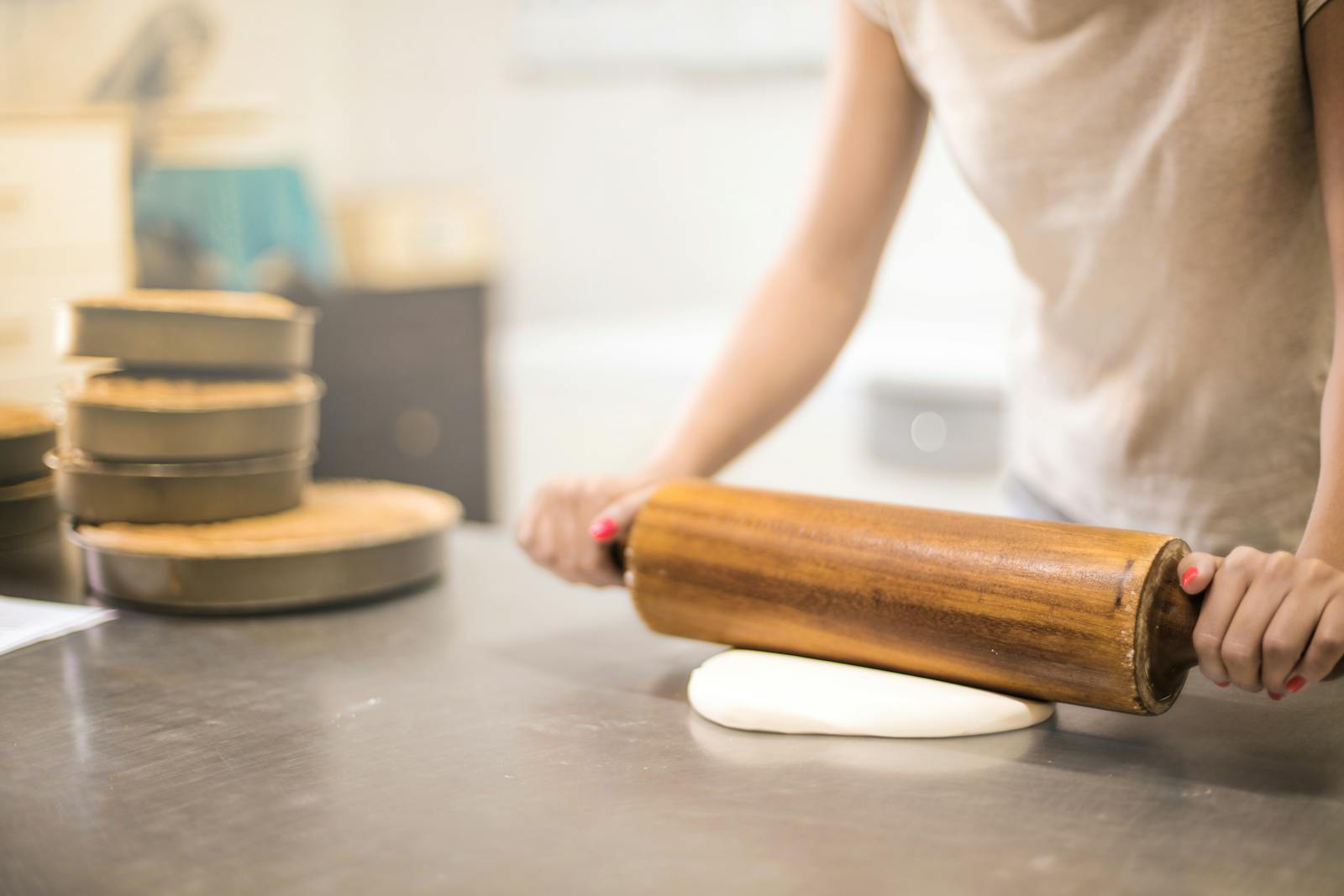
1. Wooden Rolling Pin
The wooden rolling pin was the undisputed boss of Christmas cookie prep, and a 1950s holiday baking guide in a Life magazine archive treated it as absolutely essential for flattening dough. Every batch of sugar cookies started with that steady back‑and‑forth, smoothing dough to the exact thickness Mom trusted.
That same ritual still shows up in modern tools like the embossed Christmas Wooden Rolling Pin from Enhance, which presses festive patterns into cookies and pie crusts. The stakes are simple but real, a good rolling pin controls thickness, texture, and even baking, which can make or break a tray of holiday cutouts.
2. Vintage Cookie Cutters
Vintage cookie cutters shaped like stars and trees, patented in the 1920s, turned plain dough into December icons. A detailed Smithsonian Institution report notes how these metal shapes became staples for gingerbread and sugar cookies, especially when families built simple gingerbread houses at the kitchen table.
Once those cutters came out, kids knew it was officially cookie season. The shapes did more than decorate, they standardized size so cookies baked evenly and stacked neatly into tins for gifting. For home bakers, that consistency meant fewer burnt edges and more picture‑perfect plates headed to neighbors and school parties.
3. Pastry Blender
The pastry blender, credited in a 1927 patent to Ruth Cleveland, was designed to cut cold butter into flour for tender holiday pie crusts. A focused patent record and a broader culinary history overview both highlight how this simple handle with curved blades replaced clumsier knives and forks.
By keeping butter in small, distinct pieces, the pastry blender helped bakers hit that sweet spot between flaky and sturdy, crucial for pies that had to survive travel to office parties or church potlucks. The tool also lowered the skill barrier, letting less experienced bakers turn out crusts that behaved like Grandma’s.
4. Hand-Crank Flour Sifter
The hand‑crank flour sifter from the early 1900s was the secret weapon behind smooth fruitcake batter. A detailed Vintage Kitchen Tools catalog shows how these metal cylinders, with a crank on the side, broke up lumps so spices and flour blended evenly.
For December fruitcakes loaded with dried fruit and nuts, that even texture mattered. A well‑sifted batter baked more predictably, reducing dense pockets that could sink a loaf. In crowded holiday ovens, where timing was tight, that reliability helped bakers juggle multiple recipes without sacrificing quality.
5. Pyrex Glass Measuring Cups
Pyrex glass measuring cups, introduced in 1915 by Corning Glass Works, brought lab‑style precision to home baking. A company heritage summary and a broader history of Pyrex both point out how heat‑proof glass let bakers measure, pour, and even melt ingredients in the same vessel.
During December cookie marathons, that accuracy meant consistent batches from the first tray to the last. Clear markings reduced guesswork, which protected delicate ratios of sugar, flour, and fat. For families scaling recipes up for parties, those cups quietly kept everything from shortbread to spritz cookies on track.
6. Candy Thermometer
Candy thermometers, first mass‑produced in the 1930s, finally took the mystery out of December fudge. A detailed Betty Crocker cookbook archive describes how these glass or metal thermometers clipped to the pan and tracked sugar syrup through soft‑ball and hard‑ball stages.
Instead of relying on guesswork or cold‑water tests, home cooks could hit the exact temperature needed for creamy fudge or glossy toffee. That precision mattered for budgets and morale, a failed batch meant wasted sugar and cocoa at the most expensive time of year, plus disappointed kids waiting for candy plates.
7. Manual Egg Beater
The manual egg beater with wire whisks, popular since the 1870s, was the workhorse behind whipped cream and meringues for holiday pies. A Kitchen Utensils Museum exhibit traces how these hand‑cranked tools predated plug‑in mixers but still turned heavy cream into soft peaks.
One object record titled “Whisk, ca 1950” notes that “Certainly, egg beaters of all sorts were common in American kitchens, and they whipped up the heavy cream and egg whites (for meringues) as well as eggs. But” even without motors, they delivered airy textures that made pies feel special.
8. Wooden Spoon
The wooden spoon carved from maple has roots reaching back to colonial kitchens, where it stirred dense mincemeat fillings. A detailed Colonial Williamsburg baking report shows how these sturdy spoons handled heavy mixtures of meat, dried fruit, and spices over open hearths.
In more modern Decembers, that same spoon scraped browned bits from pans and folded nuts into batter without scratching bowls. Because wood stays cool to the touch and gentle on cookware, it remained a go‑to tool even as nonstick pans and electric stoves arrived, quietly linking contemporary bakers to much older traditions.
9. Aluminum Pie Tin
Aluminum pie tins from the 1940s, distributed by Reynolds Wrap, changed how families baked and shared holiday desserts. A company history and a packaging industry summary explain how lightweight, disposable tins made it easier to send pumpkin pies from Thanksgiving through Christmas without worrying about getting dishes back.
For busy households, those tins meant more pies could travel to potlucks, office parties, and neighbors. Aluminum also conducted heat efficiently, helping crusts brown evenly. That combination of portability and performance nudged holiday baking toward larger, more community‑focused gatherings.
10. Pastry Bag with Metal Tips
The pastry bag with metal tips, rooted in 1800s French techniques, brought bakery‑level decoration into home kitchens. A concise historical note traces how cloth or plastic bags fitted with star and round tips piped precise lines of icing onto December sugar cookies.
Once families adopted these bags, holiday cookies shifted from simple glazed rounds to intricate trees, borders, and names. That visual upgrade raised expectations for homemade treats and gave kids a creative role in decorating. It also blurred the line between professional patisserie and the average suburban kitchen counter.
11. Insulated Oven Mitts
Insulated oven mitts, patented in 1915 by Herman Hirsch, quietly revolutionized safety around hot cookie sheets. A detailed patent record and a textile innovation report describe how layered fabrics and padding shielded hands from high oven temperatures.
During December baking marathons, when multiple trays rotated in and out of the oven, those mitts reduced burns and accidents. That protection let kids help more confidently and encouraged bakers to tackle ambitious schedules, knowing they could grab hot pans without improvising with thin dish towels.
12. Wire Cooling Rack
The wire cooling rack, invented in 1890 by William J. Horlick, solved the problem of soggy cookie bottoms. A patent record and a baking equipment timeline explain how raised grids let air circulate under hot pans and baked goods.
That airflow mattered when counters were crowded with gingerbread, fudge, and quick breads. By lifting treats off hot sheets, racks stopped residual heat from overbaking delicate edges. Even today, social posts like “Before electric mixers” nostalgia often show racks stacked with cooling cookies, a visual shorthand for peak holiday baking.
More from Vinyl and Velvet:

Leave a Reply