

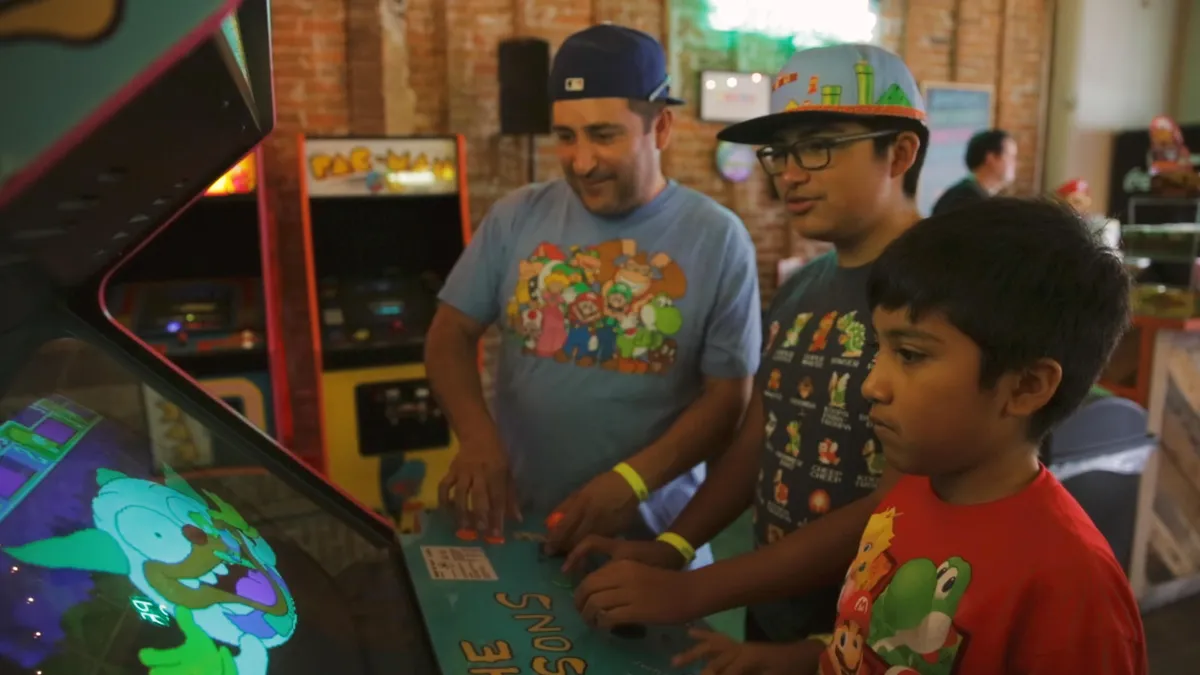
Step into an ’80s arcade in your mind and you can almost hear the clatter of quarters, the synth-heavy attract modes, and the low murmur of kids comparing high scores. Those memories are so vivid that entire nostalgia pieces now orbit them, turning cabinets and carpet patterns into cultural landmarks. Here are 10 things that made ’80s arcades incredible, and why they still shape how you remember growing up around glowing screens and stacks of tokens.
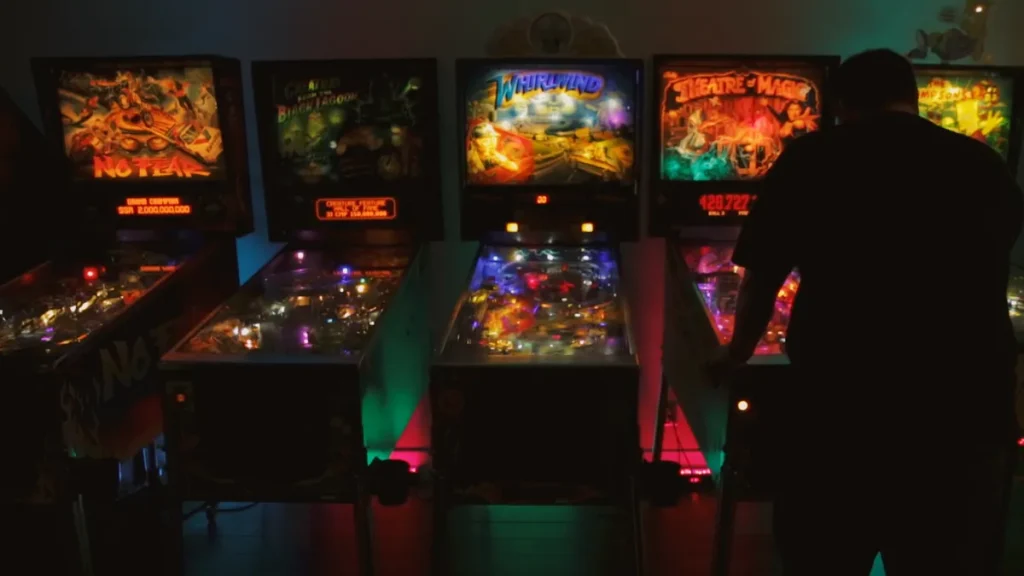
1) The ’80s as remembered in Maine – grounding arcade nostalgia in “10 Things You Might Remember if You Grew Up in Maine in the ’80s”
The phrase “10 Things You Might Remember if You Grew Up in Maine in the ’80s” captures how powerfully that decade still tugs at your memory. The very existence of the article titled exactly “10 Things You Might Remember if You Grew Up in Maine in the ’80s” shows how people now catalog those years as a set of shared moments. That framing turns everyday experiences, including afternoons at local arcades, into a kind of unofficial historical record.
When you think about ’80s arcades through that lens, each joystick and neon sign becomes one of those “10 Things” you mentally list. The cabinets are not just machines, they are memory anchors that help you reconstruct who you were and where you lived. For communities like Maine, those memories also double as proof that small-town kids were plugged into the same global arcade culture as players in bigger cities.
2) Maine as a specific backdrop for ’80s arcade culture
Maine is not just a backdrop, it is explicitly centered in that nostalgia, with the article focusing on people who “lived in Maine in the 1980s.” By tying memories to a specific state, the wording “lived-in-maine-in-the-1980s” signals that arcades there were rooted in particular towns, malls, and seaside strips. You are reminded that the glow of Galaga or Pac-Man did not float in a generic nowhere, it reflected off snowbanks, fishing villages, and mill towns.
That regional focus matters because it shows how arcades stitched into local routines. In Maine, a small cluster of cabinets in a convenience store or a seasonal arcade near the coast could become the social hub for kids who “lived in Maine in the 1980s.” The stakes are cultural: when you preserve those local details, you protect the idea that gaming history belongs to every community, not just the biggest markets.
3) The magic of a single decade: why “the ’80s” and “the-1980s” still define arcade nostalgia
The article’s repeated references to “the ’80s” and “the-1980s” underline how tightly arcade memories are bound to that one decade. By anchoring its stories in that specific period, it mirrors how you probably remember arcades as a time capsule, not just a place. The shorthand “the ’80s” instantly conjures side-scrolling beat ’em ups, vector graphics, and the sense that every year brought a new cabinet that changed the rules.
That time stamp also explains why arcades loom so large in nostalgia. The 1980s were the moment when dedicated cabinets, not home consoles, defined video games. When a piece of writing keeps repeating “the 1980s,” it is quietly insisting that this was the golden age, the benchmark against which later gaming eras are measured. For players, that makes every remembered arcade visit feel like a piece of a larger, once-in-a-lifetime wave.
4) How “10 Things” list formats mirror the way we remember favorite arcade moments
The choice to structure Maine memories as a list of “10 Things” mirrors how you naturally recall your own arcade highlights. You do not remember every quarter you spent, you remember a handful of standout games, rivalries, and locations. A numbered list turns that mental process into a readable format, each item a snapshot of a specific sensation, from the smell of popcorn to the panic of hearing “Game Over” with no more tokens.
Arcades themselves worked like that, too, with a few star cabinets drawing most of the attention. The “10 Things” approach echoes the way operators curated lineups around a core of hits, then rotated in experiments around the edges. For readers, that structure signals that what follows is not exhaustive history but a carefully chosen set of emotional touchpoints, much like your own top ten arcade memories.
5) “You Might Remember” and “Grew Up in Maine in the ’80s” – childhood, adolescence, and discovering arcades
The wording “You Might Remember” and “Grew Up in Maine in the ’80s” makes childhood and adolescence the center of the story. It assumes you were young enough then for arcades to feel larger than life, yet old enough to roam there with friends. That framing turns the arcade into a rite of passage, the place where you first navigated unstructured time, peer pressure, and the thrill of spending your own money.
By addressing people who “Grew Up in Maine in the ’80s,” the article also hints at how those experiences shaped later attitudes toward technology and community. If your first taste of digital worlds came from a cabinet in a Maine strip mall, you probably still compare modern gaming to that formative rush. The implication is clear: preserving those memories is not just sentimental, it helps explain how a generation learned to socialize around screens.
6) From local radio site to local arcade memories: what being on “wjbq.com” suggests about community culture
The article lives on a site identified in its URL as “wjbq.com,” which signals a local media outlet curating regional memory. That detail matters because the same kind of local media once promoted neighborhood arcades, running ads, contests, and high-score callouts. When a station site now hosts a nostalgia list, it is extending that role, turning from promoter of current hangouts into archivist of the ones that defined the 1980s.
For you, that continuity reinforces how deeply arcades were woven into community culture. The same channels that once told you which bands were playing or which diner had a new menu also told you where the latest cabinet had arrived. When those outlets now publish retrospectives, they validate arcade memories as part of the region’s shared story, not just a private obsession for former gamers.
7) “If You Grew Up in Maine in the ’80s” vs. “if-you-lived-in-maine-in-the-1980s” – who really shared the arcade experience?
The title’s phrase “If You Grew Up in Maine in the ’80s” and the URL’s “if-you-lived-in-maine-in-the-1980s” quietly broaden who is invited into the memory. One version emphasizes childhood, the other simply notes that you lived there. Together, they acknowledge that the arcade experience touched kids, teens, and adults, from the players hunched over joysticks to the parents waiting with rolls of quarters.
That inclusive wording reflects how arcades functioned as multigenerational spaces. Younger kids chased tickets, teenagers battled for high scores, and older residents ran or worked in the venues. By toggling between “grew up” and “lived,” the language suggests that anyone present in Maine during that decade has some stake in how those arcades are remembered, whether as playgrounds, workplaces, or background noise to everyday life.
8) Curated “10 Things You Might Remember” and the greatest hits feel of ’80s arcade lineups
The idea of a curated “10 Things You Might Remember” list parallels the greatest hits feel of classic arcade lineups. Operators knew that a few machines would become legends, so they built their floors around them, much as a nostalgia writer builds a list around the most resonant memories. Each chosen “thing” stands in for dozens of similar moments, just as one Street Fighter or Donkey Kong cabinet stands in for a whole genre in your mind.
That curation is what gives both lists and arcades their punch. You walked into a room where someone had already filtered the possibilities down to what they thought you would love. Today, when you read a list of “10 Things You Might Remember,” you are stepping into a similar act of selection, trusting that the highlights will match your own internal ranking of what made the ’80s unforgettable.
9) Regional nostalgia: “Maine” plus “the ’80s” and “lived-in-maine-in-the-1980s” as a lens on small-town arcades
Combining “Maine” with “the ’80s” and the URL phrase “lived-in-maine-in-the-1980s” creates a powerful lens on small-town arcade life. It suggests that everyday experiences in that state, from snow days to summer boardwalks, are now seen as distinctive or special. Arcades fit neatly into that frame, because they were often modest in size yet huge in emotional impact, a few cabinets transforming a quiet town into a portal to global pop culture.
That regional nostalgia also highlights how different your arcade memories might be from someone who grew up in a major city. In Maine, the nearest arcade could be a drive away, turning each visit into an event. When modern writing pairs geography and decade so explicitly, it is acknowledging that where you played matters as much as what you played, and that preserving those local textures keeps the broader history of ’80s arcades honest.
10) Why listicles like “10 Things You Might Remember if You Grew Up in Maine in the ’80s” keep arcade memories alive
Modern nostalgia listicles are part of a broader trend that keeps arcade memories circulating instead of fading. Pieces that combine “10 Things,” “Maine,” and “the 1980s” sit alongside retrospectives that invite you to rediscover the quirks of ’80s arcades, from myths about hidden levels to the social rituals around high scores. Together, they form an informal archive that treats cabinets, tokens, and carpet patterns as artifacts worth revisiting.
For you, the payoff is more than a quick hit of nostalgia. These list-based histories help explain why arcades still influence everything from barcades to retro game design. By organizing memories into digestible sets of “things you might remember,” they make it easy to share your own stories, compare them with others, and keep the culture of incredible ’80s arcades alive for people who never dropped a quarter into a real cabinet.
More from Vinyl and Velvet:

Leave a Reply