

Every family has that one plate of holiday treats that shows up like clockwork, the same way Grandma’s handwriting appeared on every gift tag. These retro sweets were the backbone of At Christmas dessert tables, passed from kitchen to kitchen and decade to decade, and they still taste like pure nostalgia.
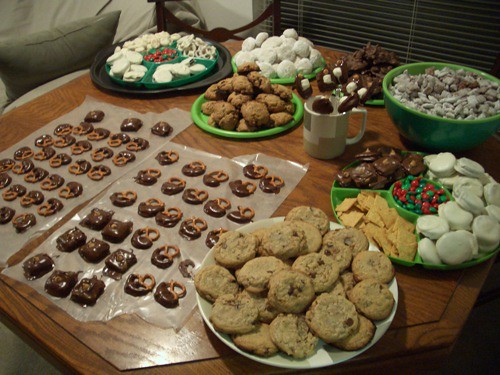
1) Divinity
Divinity was the airy candy that Southern grandmas guarded like a state secret. Reported as a holiday staple in the American South during the 1930s, it relied on beaten egg whites, sugar, and corn syrup, a clever way to stretch pantry basics when money was tight.
Because it was billed as a no-cook or low-equipment recipe, divinity fit the realities of the Great Depression, when reliable ovens and fancy tools were hardly guaranteed. Families still pull out those stained recipe cards, partly for the sweet bite, but mostly for the reminder of how resourceful earlier generations had to be.
2) Homemade Fudge
Homemade fudge was the square that disappeared first from Midwestern cookie trays. By the 1920s, chocolate stovetop fudge had become a Christmas tradition in those households, helped along by detailed instructions in Betty Crocker cookbooks that walked home bakers through softball stages and glossy finishes.
Because it relied on cocoa or baking chocolate, sugar, and butter, fudge was a relatively affordable luxury that felt like a big deal. Grandmothers often made multiple batches, tweaking nuts or vanilla, and those small variations became part of each family’s identity, a reminder that even simple candy can carry serious emotional weight.
3) Sugar Cookies
Sugar cookies were the canvas for every kid’s wildest frosting dreams. In the 1950s, grandmothers leaned on Pillsbury Bake-Off recipes, rolling dough into stars, bells, and trees that could stand up to colored sugar and thick icing without losing their shape.
Those cutouts did more than taste good, they turned the kitchen into a seasonal workshop where children learned to bake and decorate. The tradition still shows up in modern threads about which cookies belong on At Christmas plates, where sugar cookies sit right alongside rum balls, fudge, buckeyes, snow balls, gingerbread, and more.
4) Fruitcake
Fruitcake is the retro treat everyone jokes about but secretly expects to see. Dense with candied fruits and nuts and often soaked in rum, it has been a holiday gift item since the 19th century, with a particularly famous version shipped from Collin Street Bakery in Corsicana, Texas, starting in 1896.
Because it travels well and actually improves as it rests, fruitcake became the classic mail-order present for far-flung relatives. Grandmothers who baked their own mirrored that model, wrapping loaves in wax paper and twine, turning a single afternoon of work into weeks of ready-made hospitality.
5) Thumbprint Cookies
Thumbprint cookies brought a pop of color to otherwise beige cookie plates. In European-American homes during the 1940s, wartime editions of Joy of Cooking promoted these jam-filled treats, using a simple indentation and a spoonful of raspberry or apricot to stretch limited butter and sugar.
Because they relied on pantry jams, they fit rationing rules while still feeling special. Grandmothers could bake a single batch and offer multiple flavors, which made these cookies a quiet lesson in thrift, creativity, and the idea that scarcity does not have to cancel celebration.
6) Gingerbread Houses
Gingerbread houses were the edible architecture project that signaled the holidays had truly arrived. Built from spiced cookie panels rooted in German immigrant traditions brought to the U.S. in the 1800s, they gained wider holiday traction in the 1930s as The Gingerbread Man story spread.
Grandmothers often baked the walls and roofs days ahead, then gathered kids to glue everything together with royal icing. The result was less about structural perfection and more about shared time, a reminder that the real payoff of these retro treats is the memory of who stood around the table.
7) Rum Balls
Rum balls were the slightly grown-up treat that kids eyed and adults claimed. Emerging as a post-Prohibition holiday recipe in the 1930s, they used crushed vanilla wafers, nuts, cocoa, and rum, often folded around leftover cake so nothing went to waste.
That thrifty, boozy bite still resonates in modern kitchens, where one baker describes her mother’s German heritage and says the holiday recipe she was most famous for was these Rum Balls. When a single confection can carry both cultural identity and family legend, it earns a permanent spot on the retro list.
8) Peanut Brittle
Peanut brittle was the candy that tested both teeth and patience. In Southern U.S. families, it had been a Christmas staple since the late 1800s, with an 1890s recipe calling for baking soda to create that signature airy, crisp snap when the sheet was broken into shards.
Grandmothers often poured the molten mixture onto buttered pans, then let kids help crack it into irregular pieces once it cooled. The ritual turned a precise sugar-cooking process into a communal event, and the candy’s durability made it perfect for gifting to neighbors and church friends all season long.
9) Spritz Cookies
Spritz cookies brought a touch of Scandinavian flair to Midwestern and Upper Plains tables. As a Scandinavian-American holiday custom from the early 1900s, they were piped through a press into tiny wreaths and rosettes, their shapes carefully documented in community and church cookbooks.
Because the dough was rich but thinly portioned, a single batch yielded dozens of bite-size cookies, perfect for crowded gatherings. Grandmothers who mastered the cookie press passed down not just a recipe but a specific tool, turning the metal gadget itself into a family heirloom.
10) Stollen
Stollen was the centerpiece loaf that anchored many German-American holiday tables. This fruit-studded yeast bread, dusted heavily with powdered sugar, has been baked by German grandmothers in U.S. communities every December since the 1700s, its folded shape meant to symbolize the Christ child wrapped in swaddling clothes.
Because it blends dried fruit, nuts, and gentle spice, stollen bridges everyday bread and dessert, making it ideal for long, lingering breakfasts. Its symbolism underscores how deeply these retro treats are tied to belief, migration, and memory, far beyond whatever ends up on the plate.
More from Vinyl and Velvet:

Leave a Reply