

Old matchbooks, menus, and bits of printed paper can look disposable, yet collectors chase certain examples as fiercely as rare coins or comics. The ten pieces below show how everyday ephemera, from speakeasy cocktail lists to fast‑food menus, can capture turning points in music, war, travel, and pop culture while commanding serious prices.
1) 1920s Cotton Club Matchbook
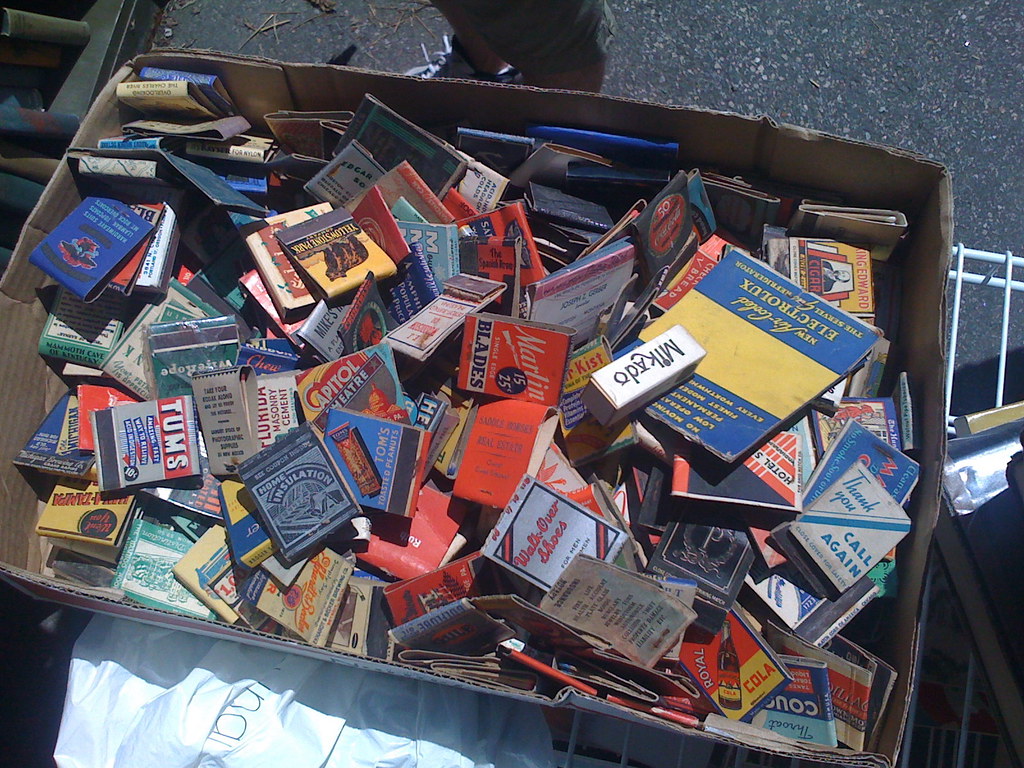
The 1920s matchbook from the Cotton Club in Harlem, New York, is coveted because it links directly to Prohibition nightlife and the rise of jazz. Collectors prize examples with crisp Art Deco graphics that echo the club’s stage sets and signage, pairing geometric patterns with bold typography. The club’s house band featured Duke Ellington, and surviving matchbooks are often discussed alongside concert handbills and menu cards that documented his residency. For ephemera specialists, that combination of design and musical history makes even a tiny matchbook a centerpiece item.
Rarity and provenance drive values higher. Sets of Cotton Club ephemera, including matchbooks, have appeared in auctions such as the Charlie Watts collection of jazz material, where catalog notes stressed the club’s role in Harlem, New York, during Prohibition. Modern sellers highlight that the venue showcased Black entertainers like Duke Ellington to largely white audiences, a tension that now shapes how you interpret the imagery. When you handle one of these matchbooks, you are not just holding advertising, you are holding a fragment of American cultural conflict and creativity.
2) 1955 Original McDonald’s Menu
A 1955 menu from the original McDonald’s in San Bernardino, California, is one of the most sought‑after fast‑food paper collectibles. The menu listed hamburgers for 15 cents, a price point that helped define the chain’s early promise of quick, affordable meals. According to company histories, that simple sheet of paper captured the streamlined offerings that would later spread worldwide. Ephemera enthusiasts now value surviving examples at up to $5,000, especially when the paper stock, fonts, and grease‑stained edges clearly match period photographs of the stand.
For collectors, the stakes go beyond nostalgia for cheap burgers. The 1955 menu marks a shift in how Americans ate, as car‑centric drive‑ins and standardized kitchens reshaped local dining. Owning an original menu lets you trace the moment when regional roadside food began turning into a global system. It also illustrates how modest commercial print jobs, often tossed after a single use, can become key documents for historians studying labor, franchising, and suburban growth.
3) 1940s U.S. Ration Book
A 1940s wartime ration book issued by the U.S. Office of Price Administration is a cornerstone of World War II home‑front collecting. Each booklet contained perforated stamps for essentials like sugar and meat, and families had to surrender the correct coupons before they could buy restricted goods. The National WWII Museum notes that surviving books with intact pages and legible covers typically bring $200 to $500 at auction, with higher prices for examples that still include matching registration documents or envelopes.
These ration books matter because they show how deeply the war reached into daily life. Instead of focusing only on battles, they document how civilians in small towns and big cities adjusted recipes, shared gardens, and tracked every pound of sugar. When you study the stamps and handwritten names, you see how federal policy translated into kitchen‑table decisions. Collectors and educators use them to explain inflation control, supply chains, and the social pressure to “do your part” during global conflict.
4) 1930s RMS Queen Mary Matchcover
A 1930s matchcover from the RMS Queen Mary ocean liner appeals to both maritime historians and design‑driven collectors. These covers were printed with nautical motifs that echoed the ship’s streamlined profile, often featuring funnels, waves, and the vessel’s name in elegant lettering. According to accounts of the RMS Queen Mary, the liner symbolized transatlantic glamour, and its onboard branding extended down to small items like matchbooks and stationery. Well‑preserved matchcovers from first‑class lounges can reach $300 or more.
The value reflects how the Queen Mary condensed an era of ocean travel just before commercial jets took over. Collectors see each matchcover as a ticket back to a time when crossing the Atlantic meant days of formal dinners, deck games, and strict class divisions. Because many matchbooks were used and discarded, surviving examples help document which bars, smoking rooms, and promotional campaigns the shipping line emphasized. For you as a collector, they offer a compact way to track the intersection of tourism, engineering, and graphic design.
5) 1960s Pike Place Starbucks Menu
The 1960s lunch and coffee menu from the first Starbucks at Pike Place Market in Seattle is a surprisingly scarce piece of corporate history. Early materials from the original store show coffee priced at 5 cents per cup, a figure that now feels almost unreal compared with modern café boards. Company history notes that this simple paper menu, listing basic brewed coffee and a few related items, predates the elaborate drink customizations that later defined the brand. Surviving examples are estimated at $1,000 to $2,000, especially when the printing and logo match early photographs.
Collectors chase this menu because it captures the birth of a global chain in a hyperlocal setting. Pike Place Market was a neighborhood hub, and the first Starbucks leaned on straightforward pricing rather than lifestyle marketing. When you compare the 5‑cent listing to current prices, you can trace how specialty coffee evolved from commodity to premium experience. For ephemera specialists, that shift makes the menu a key artifact in the story of urban redevelopment, changing taste, and the rise of branded “third places.”
6) 1928 Chicago Speakeasy Cocktail Menu
A 1928 cocktail menu from a Chicago speakeasy such as the Green Mill offers a rare printed record of illegal drinking during Prohibition. Menus from that era listed cocktails at $1 each, a steep price that reflected the risks of serving alcohol and the costs of smuggling. Reporting on Prohibition culture notes that these menus often disguised liquor behind playful names, while regulars knew which drinks contained gin, whiskey, or rum. In today’s collector markets, a well‑documented 1928 speakeasy menu can sell for around $4,000.
The stakes for historians and collectors are significant, because so much of speakeasy life went unrecorded. Police raids and legal threats meant many operators avoided leaving paper trails, so any surviving menu helps map the underground economy of Chicago nightlife. When you study the typography, pricing, and drink lists, you see how venues balanced secrecy with the need to entice customers. For modern bar owners and graphic designers, these menus also serve as templates for contemporary “speakeasy‑style” branding that borrows from real clandestine history.
7) 1970s Pan Am Apollo 11 Ticket Stub
A 1970s airline ticket stub from Pan Am Flight 001, linked in company lore to the Apollo 11 crew and signed by astronauts, sits at the intersection of aviation and space‑race memorabilia. Records from the Pan Am Historical Foundation describe how the airline promoted around‑the‑world services and cultivated an image tied to exploration. A stub associated with Apollo 11, especially one bearing astronaut signatures, has commanded more than $10,000 at heritage auctions, reflecting intense demand from both space collectors and Pan Am enthusiasts.
What makes this paper scrap so powerful is the way it compresses multiple frontiers into a single object. Pan Am represented the glamour of international air travel, while Apollo 11 symbolized the leap to the moon. When you hold a signed ticket stub, you connect commercial aviation’s global routes with the era’s ultimate journey beyond Earth. For collectors, that convergence of branding, celebrity autograph culture, and Cold War technology turns a routine travel document into a museum‑worthy artifact.
8) 1890s Coca-Cola Santa Claus Trade Card
An 1890s trade card from Coca‑Cola featuring Santa Claus imagery is one of the most influential advertising paper items of its time. Company history notes that these promotional cards were handed out to customers, pairing the Coca‑Cola script with early depictions of Santa that helped standardize his look in popular culture. Surviving examples from the 1890s, especially those with bright color lithography and clean backs, are valued between $500 and $1,500. Collectors pay close attention to printing details that confirm the card’s place in the brand’s evolving holiday campaigns.
The broader impact of this trade card reaches far beyond soda marketing. By linking Santa Claus to a specific product, Coca‑Cola helped cement the idea of Christmas as a season of branded celebration and consumer ritual. For ephemera collectors, the card illustrates how late‑nineteenth‑century print technology, mass distribution, and character design combined to shape modern holidays. It also shows how a small giveaway, meant to be pinned to a wall or tucked into a drawer, can become a key reference point for historians studying visual culture.
9) 1985 Live Aid Wembley Ticket
A 1985 concert ticket from Live Aid at Wembley Stadium in London captures one of the most famous charity events in rock history. The ticket price was £25 for the July 13, 1985, show, which assembled acts like Queen, U2, and David Bowie to raise funds for famine relief. BBC reporting on the anniversary of the event notes that original Wembley tickets now fetch between $300 and $800, depending on condition and accompanying memorabilia such as programs or wristbands. For many collectors, the ticket’s simple design belies its emotional weight.
The appeal lies in how Live Aid fused music, television, and activism into a single global moment. A surviving ticket is proof that you, or a previous owner, stood inside Wembley as performances were broadcast around the world. That connection to a shared humanitarian cause gives the paper a resonance beyond typical concert souvenirs. As charity concerts and livestreams continue to evolve, Live Aid tickets serve as benchmarks for how cultural events can mobilize audiences and reshape expectations for what entertainment can accomplish.
10) 1920s Waldorf Astoria Hotel Stationery
Hotel stationery from the Waldorf Astoria in 1920s New York is a classic example of luxury ephemera. Sheets and envelopes from that era were embossed with gold lettering and the hotel’s crest, signaling status even before a word was written. Historical timelines note that celebrities such as Cole Porter used Waldorf Astoria stationery, and collectors pay premiums for pieces that can be linked to notable guests. Typical valuations range from $150 to $400, with higher prices for unused sets that retain their original texture and sheen.
For you as a collector, this stationery offers a window into how hospitality brands sold an experience long before loyalty apps and influencer campaigns. The weight of the paper, the precision of the embossing, and the address at Park Avenue all reinforced the Waldorf Astoria’s image as a social hub. Today, designers and branding experts study these sheets to understand how typography and tactile details communicate exclusivity. In the broader ephemera market, they demonstrate how even a blank page can carry the imprint of a city’s cultural life.
More from Vinyl and Velvet:

Leave a Reply